
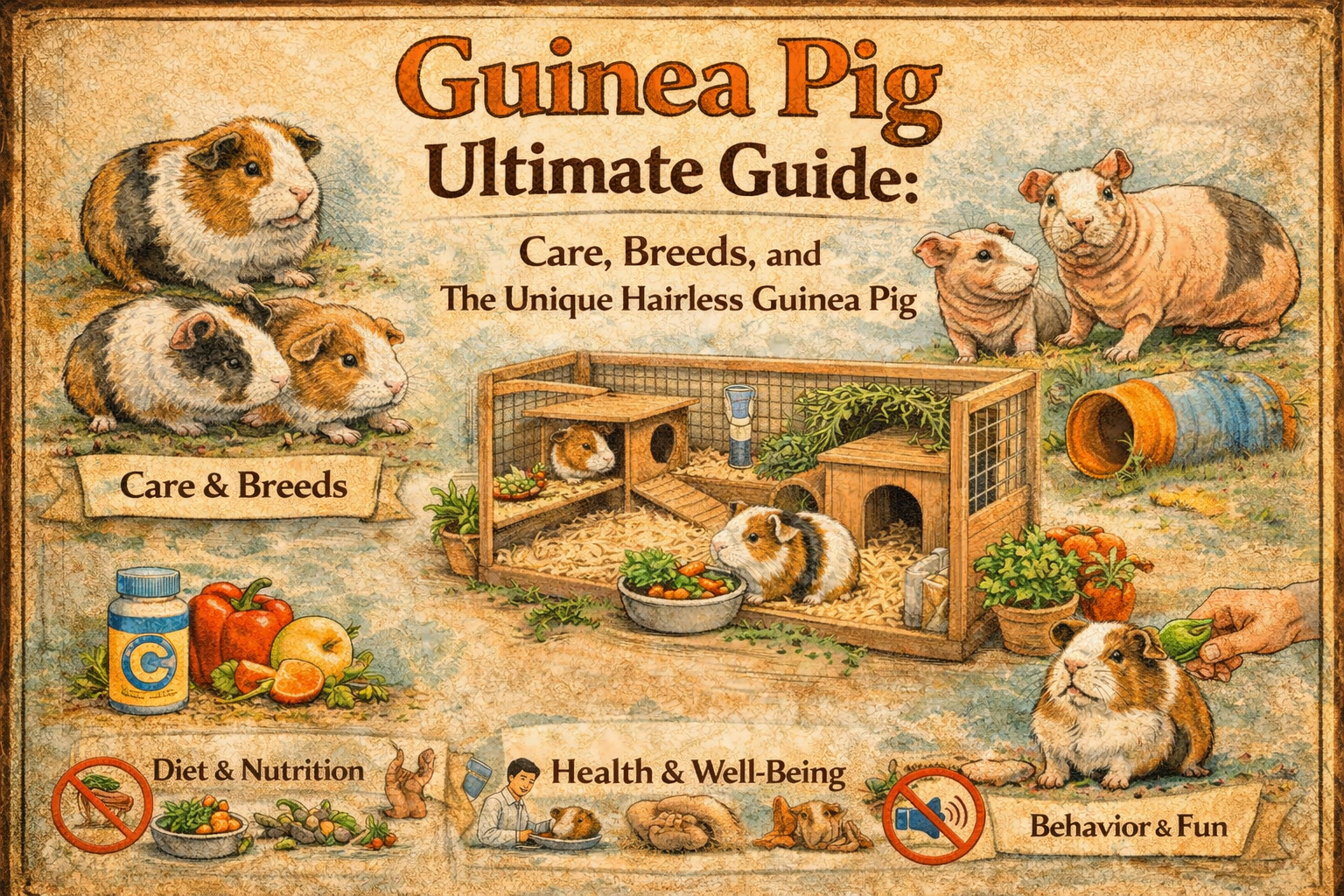
Guinea Pig Ultimate Guide: Care, Breeds, and The Unique Hairless Guinea Pig
Introduction
Are you considering bringing a small, adorable companion into your home? If so, you are likely researching the guinea pig. These charming rodents, often called “cavies,” have been beloved pets for centuries, and for good reason. They are sociable, vocal, and full of personality. However, owning one is a significant responsibility. About Guinea pig ownership, there is much more to learn than just filling a bowl with pellets. From their natural habits in the wild to the specific needs of exotic varieties like the hairless guinea pig, this guide covers everything you need to know to be the best pet parent possible.
Whether you are a first-time owner or looking to expand your knowledge, you’ve come to the right place. We will delve deep into the world of cavies, exploring their history, behavior, dietary needs, health concerns, and the sheer joy they bring to a household. And for visual learners and dedicated fans, don’t forget to check out MrGuineaPigsOfficial on YouTube for adorable shorts and expert care tips that bring these concepts to life.

Chapter 1: The Origin and History of the Guinea Pig
To truly understand the modern guinea pig, we must look back thousands of years. Contrary to what their name might suggest, guinea pigs are not from Guinea, nor are they related to pigs. They are native to the Andes region of South America, specifically modern-day Peru, Bolivia, and Ecuador.
The Andean Legacy
The domestication of the guinea pig ( Cavia porcellus ) is believed to have begun around 5000 B.C. Initially, they were domesticated not as pets, but as a food source. Ancient cultures, such as the Moche people, often depicted guinea pigs in their art and pottery. For the indigenous peoples of the Andes, the guinea pig, or “cuy,” remains a traditional culinary staple and is also used in folk medicine and cultural ceremonies, where they are sometimes used to diagnose illnesses.
How They Got Their Name
The etymology of the name “guinea pig” is a subject of debate. One theory suggests that European traders first brought the animals to Europe from the Guinea coast of West Africa, leading people to associate them with that region. Another theory posits that “Guinea” was used to refer to an unknown, faraway land. The “pig” part of the name likely refers to their stout, rounded bodies and the squealing sounds they make, which are reminiscent of a piglet.
Arrival in Europe
In the 16th century, Spanish, Dutch, and English traders brought guinea pigs to Europe, where they quickly became exotic pets among the upper class and royalty. Queen Elizabeth I of England was even known to have owned a pet guinea pig. Their docile nature and ease of care compared to larger animals made them popular, and by the 19th century, they were common household pets across all levels of society. They also became vital subjects in scientific research (leading to the term “guinea pig” for a test subject), contributing to countless medical breakthroughs, though today, ethical breeding and pet ownership are the primary focus.
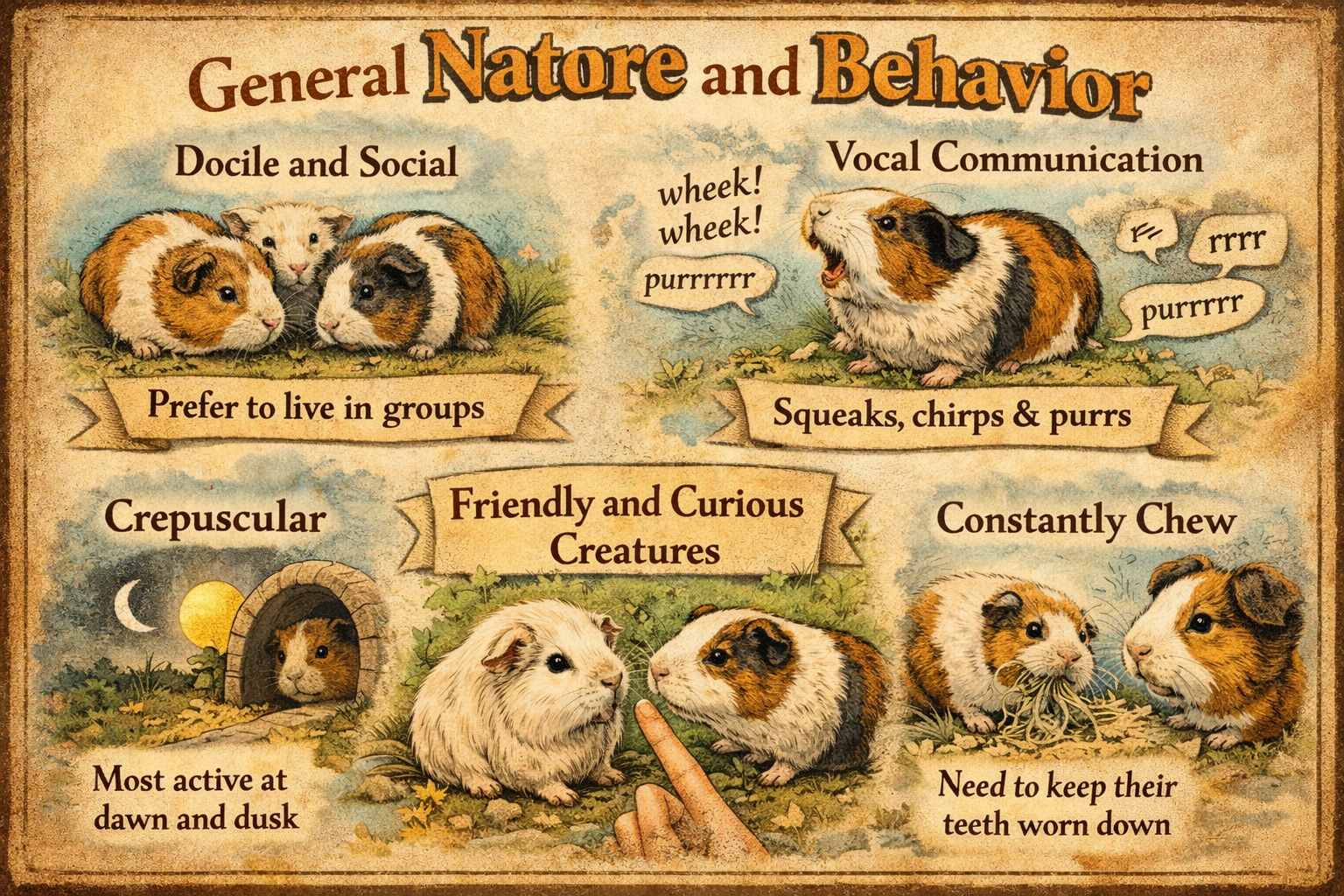
Chapter 2: General Nature and Behavior
What is it like to live with a guinea pig? Understanding their nature is the first step to building a strong bond. About Guinea pig behavior, one thing is constant: they are prey animals. This instinct shapes almost every aspect of their personality.
The Prey Animal Mentality
Because they are a food source for predators in the wild, guinea pigs are naturally cautious. They may startle easily at loud noises or sudden movements. This is why it is crucial to move slowly and speak softly when you first bring your new pet home. It may take days or even weeks for a guinea pig to fully trust you. However, once that trust is earned, they reveal their sweet, inquisitive, and affectionate nature.
Social Structure
In the wild, guinea pigs live in herds (or groups) of up to ten individuals. This social structure is critical for survival, as more eyes and ears mean a better chance of spotting danger. As a result, guinea pigs are highly social creatures. In fact, in many countries, including Switzerland, it is illegal to keep a single guinea pig because solitude is considered harmful to their well-being. They communicate constantly through sounds and body language, and they will groom each other, play together, and sleep in a pile for warmth and comfort.
Vocalizations: The Language of Wheeks
One of the most delightful aspects of owning a guinea pig is their extensive vocabulary. They are perhaps the most vocal of all small rodents. Learning to interpret their sounds is key to understanding their needs:
-
Wheeking: This is the most famous sound—a loud, high-pitched whistle. It is almost exclusively used to express anticipation and excitement, usually for food. If your guinea pig hears the rustle of a plastic bag or the refrigerator door opening, you will likely hear a chorus of wheeks.
-
Purring: This can mean different things depending on the pitch. A deep, relaxed purr accompanied by a calm posture indicates contentment. A higher-pitched, more staccato purr can sometimes indicate annoyance or fear.
-
Chattering/Teeth Chattering: This is a clear warning sign. It means your guinea pig is angry or agitated and may be telling another guinea pig (or your hand) to back off.
-
Rumbling: This sound is often associated with mating behavior. A male (boar) will “rumble” or “motor” around a female (sow) to court her. It sounds like a slow, deep purr.
-
Shrieking: A loud, high-pitched shriek is a distress call. If you hear this, check on your guinea pig immediately, as they may be hurt or fighting.
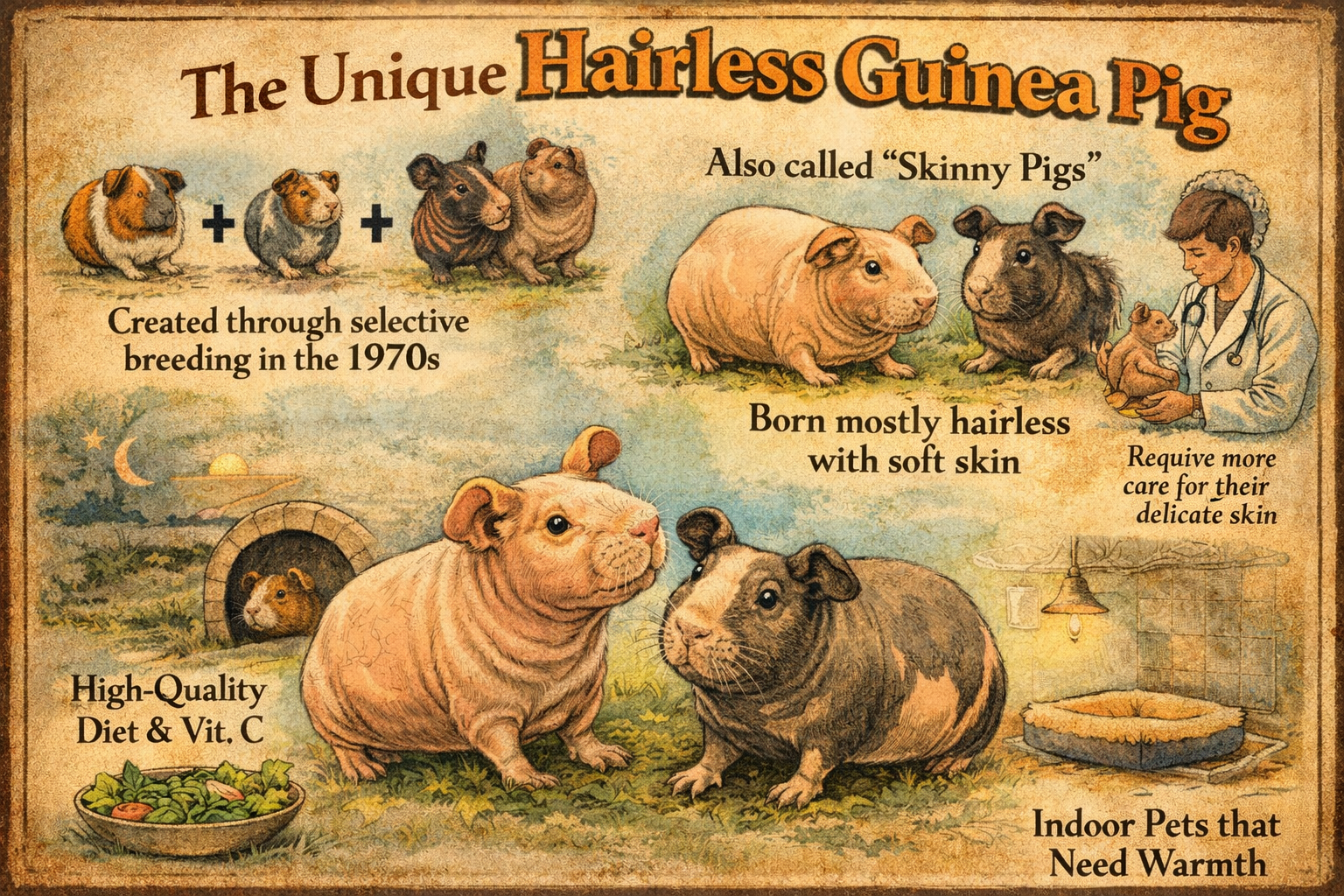
Chapter 3: The Unique Hairless Guinea Pig
When we think of a guinea pig, we usually picture a fluffy ball of fur. However, there is a unique and increasingly popular variety that defies this image: the hairless guinea pig. These fascinating creatures, often called “skinny pigs” or “baldwin guinea pigs,” are not just a novelty; they are a distinct breed with specific care requirements.
Skinny Pigs vs. Baldwin Guinea Pigs
It is important to distinguish between the two main types of hairless guinea pig breeds:
-
The Skinny Pig: This breed has hair on their muzzles, feet, and legs, but is mostly bald on their bodies. They have a genetic mutation that was first developed in a laboratory in 1978 for dermatological studies. They were introduced to the pet market in the 1990s and have since become a beloved pets. Their skin is soft and wrinkled, often feeling like warm suede or a rubber hot water bottle.
-
The Baldwin Guinea Pig: This is a completely different breed that originated from a spontaneous genetic mutation in California in the 1970s. Baldwins are born with a full coat of hair, but starting around 2-5 days of age, they begin to lose it, starting from the face and moving backward. By the time they are two months old, they are usually completely bald, with perhaps a few whiskers. Their skin is smooth and rubbery.
Caring for a Hairless Guinea Pig
Caring for a hairless guinea pig is similar to caring for a furry one, but with a few critical differences due to their lack of coat.
-
Temperature Control: Without fur, they have a much harder time regulating their body temperature. They need to live in a warm environment, ideally between 70-75°F (21-24°C). They are prone to chills and respiratory infections if they get too cold. Conversely, they can also get sunburned or overheated, so they must be kept out of direct sunlight and drafts.
-
Dietary Needs: Because they lack fur, their metabolism works overtime to keep their bodies warm. This means a hairless guinea pig often requires more food—specifically, more hay and pellets—than their furry counterparts to maintain a healthy body weight.
-
Skin Care: Without fur to absorb natural oils, a hairless guinea pig’s skin can become very oily and greasy. They require more frequent baths (about once a month) using a gentle, guinea pig-safe shampoo. Their skin can also become dry and flaky, especially in winter, so they may benefit from a tiny dab of coconut oil rubbed onto their skin.
Despite their unusual appearance, the hairless guinea pig has the same wonderful personality as any other breed. They are just as social, vocal, and affectionate, often seeking out warm laps to snuggle in, which makes them incredibly endearing pets.
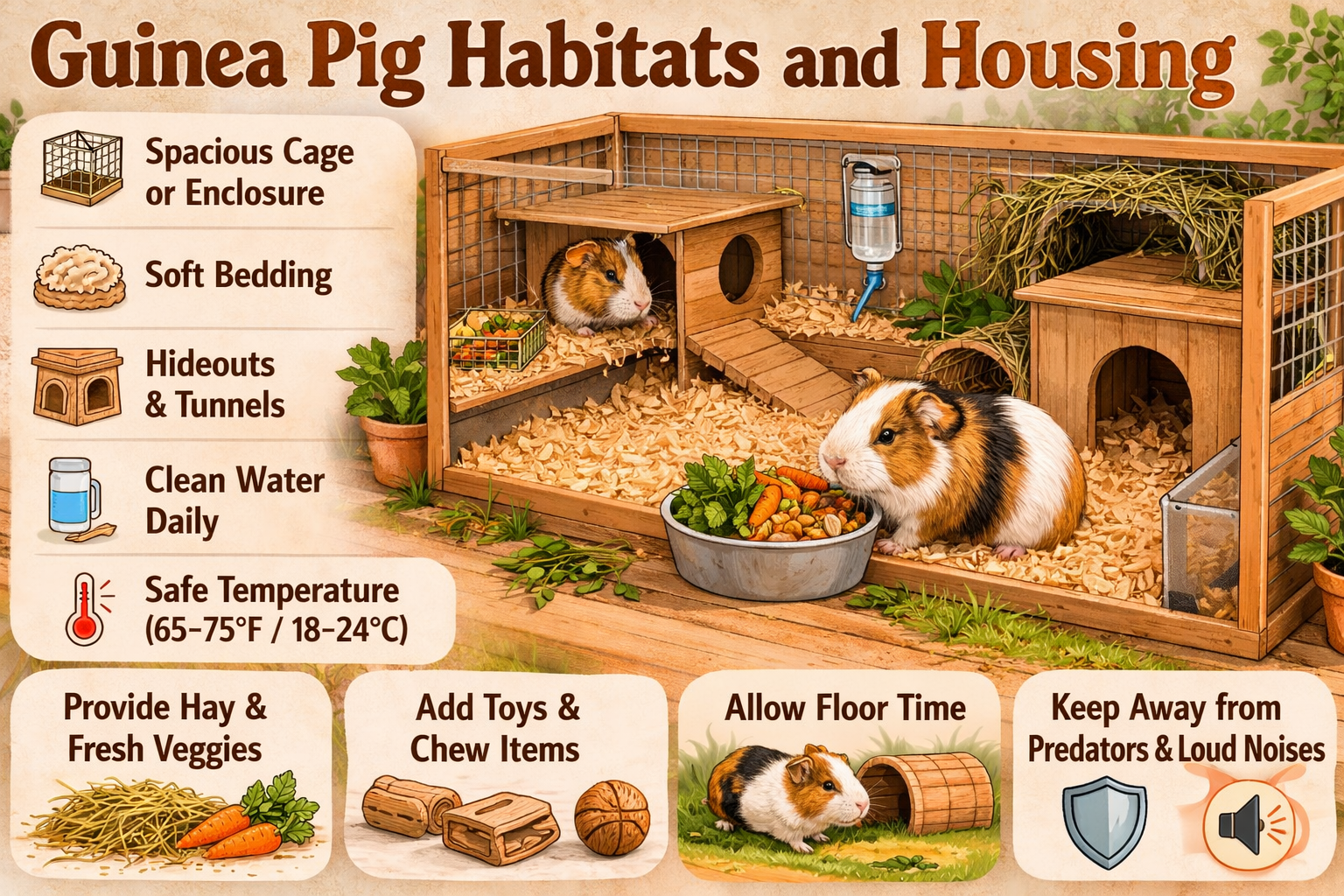
Chapter 4: Guinea Pig Habitats and Housing
Providing the correct housing is one of the most important aspects of guinea pig care. The days of keeping these animals in small, wire-bottomed cages are over. Modern understanding of their needs dictates that space, safety, and comfort are paramount.
The Importance of Space
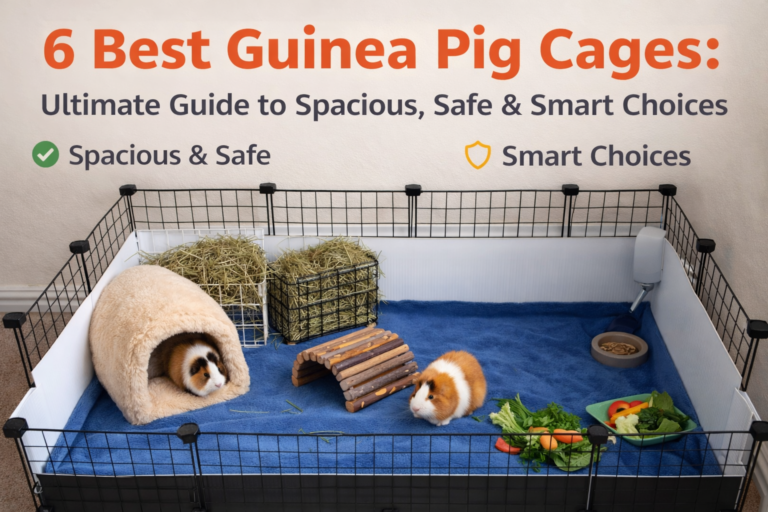
A common misconception is that because guinea pigs are small, they don’t need much space. This is false. Guinea pigs are active creatures that need room to run, popcorns (jump for joy), and to explore. The minimum recommended cage size for two guinea pigs is 7.5 square feet (like a 2×4 grid C&C cage), but bigger is always better.
Types of Housing
-
C&C Cages (Cube and Coroplast): These are widely considered the gold standard in the guinea pig community. They consist of wire grid cubes for the frame and a solid Coroplast plastic base. They are affordable, highly customizable, and easy to clean.
-
Store-Bought Cages: Many cages sold in pet stores are too small. If you buy one, ensure it meets the minimum size requirements and has a solid floor. Wire floors can cause a painful condition called bumblefoot, where sores develop on their feet.
-
Outdoor Housing: In mild climates, some owners keep guinea pigs outdoors in secure hutches. However, they are very sensitive to temperature extremes, predators, and dampness. They must be brought indoors during bad weather or extreme temperatures.
Bedding and Substrate
The floor of the cage must be lined with bedding that is soft, absorbent, and safe.
-
Fleece Liners: Many owners prefer “piggy bedding” made from fleece over an absorbent layer (like towels or u-haul pads). Fleece is soft, reusable, and allows droppings to sit on top for easy spot cleaning (sweeping).
-
Paper-Based Bedding: This is a highly absorbent, dust-extracted option that is great for burrowing. It is more expensive but very effective.
-
Wood Shavings: If using wood, never use cedar or pine shavings with aromatic oils, as they can cause severe respiratory damage. Kiln-dried aspen is the only safe wood shaving option.
Cage Accessories
Make the cage a home with:
-
Hides: Provide at least one hidey house per pig, with two exits to prevent trapping.
-
Hay Racks and Food Bowls: Heavy ceramic bowls prevent tipping.
-
Water Bottles: Check daily to ensure the ball isn’t stuck and the water is flowing.
-
Tunnels and Toys: Cardboard tubes, paper bags, and wooden chew toys provide essential enrichment.
Chapter 5: Diet and Nutrition
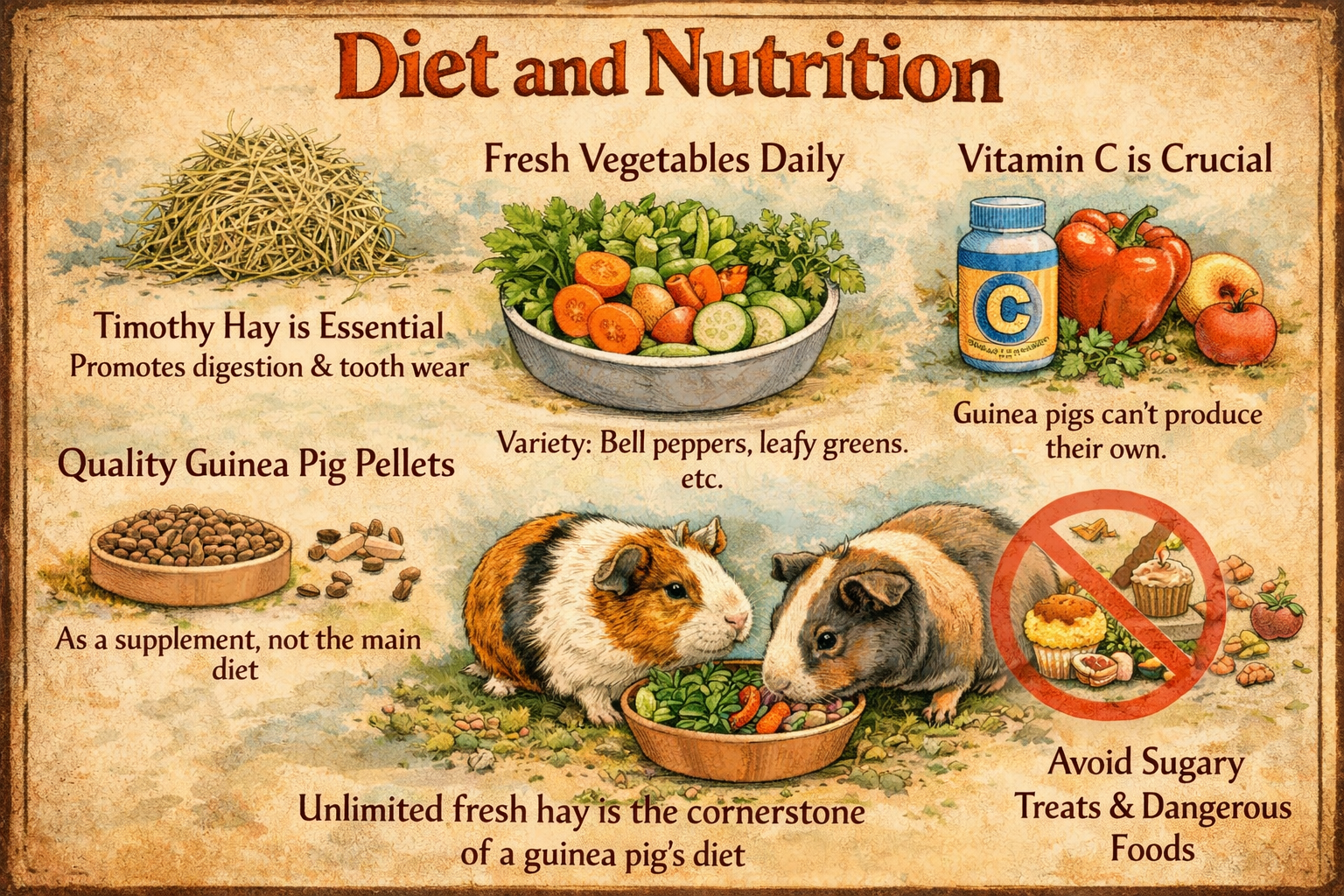
The phrase “You are what you eat” is critical for a guinea pig. They have a complex digestive system that requires a specific balance of nutrients. An improper diet is the leading cause of health problems in domestic cavies.
The Three Pillars of a Guinea Pig Diet
-
Unlimited High-Quality Hay (80% of Diet): Timothy hay, orchard grass, or meadow hay should be available 24/7. Hay is essential for two reasons:
-
Digestion: The high fiber content keeps their gut moving properly, preventing a dangerous condition called gastrointestinal stasis.
-
Dental Health: A guinea pig’s teeth grow continuously throughout their life. The constant chewing and grinding of tough hay wears their teeth down to a proper length. Without hay, their teeth can overgrow, leading to painful mouth injuries and an inability to eat.
Note: Alfalfa hay is too rich in calcium and protein for adult guinea pigs and should only be given to pregnant, nursing, or young pigs under 6 months.
-
-
Fresh Vegetables (About a Cup per Pig per Day): Guinea pigs need a daily serving of vitamin C-rich vegetables. Since they cannot produce their own vitamin C, it must come from their diet.
-
Staples: Bell peppers (especially red, which are highest in vitamin C), romaine lettuce, cilantro, and cucumber.
-
Occasional Treats: Carrots, zucchini, and cherry tomatoes (high in sugar).
-
Avoid: Iceberg lettuce (no nutritional value), potatoes, onions, garlic, and any human junk food.
-
-
Fortified Pellets (About 1/8 Cup per Pig per Day): A high-quality, timothy-hay-based pellet provides essential vitamins and minerals. Ensure the pellets are plain (no colorful bits, seeds, or nuts, which are choking hazards) and are fortified with Vitamin C. Because Vitamin C degrades quickly, pellets should be stored in a cool, dark place and used within a few months of opening.
The Importance of Vitamin C
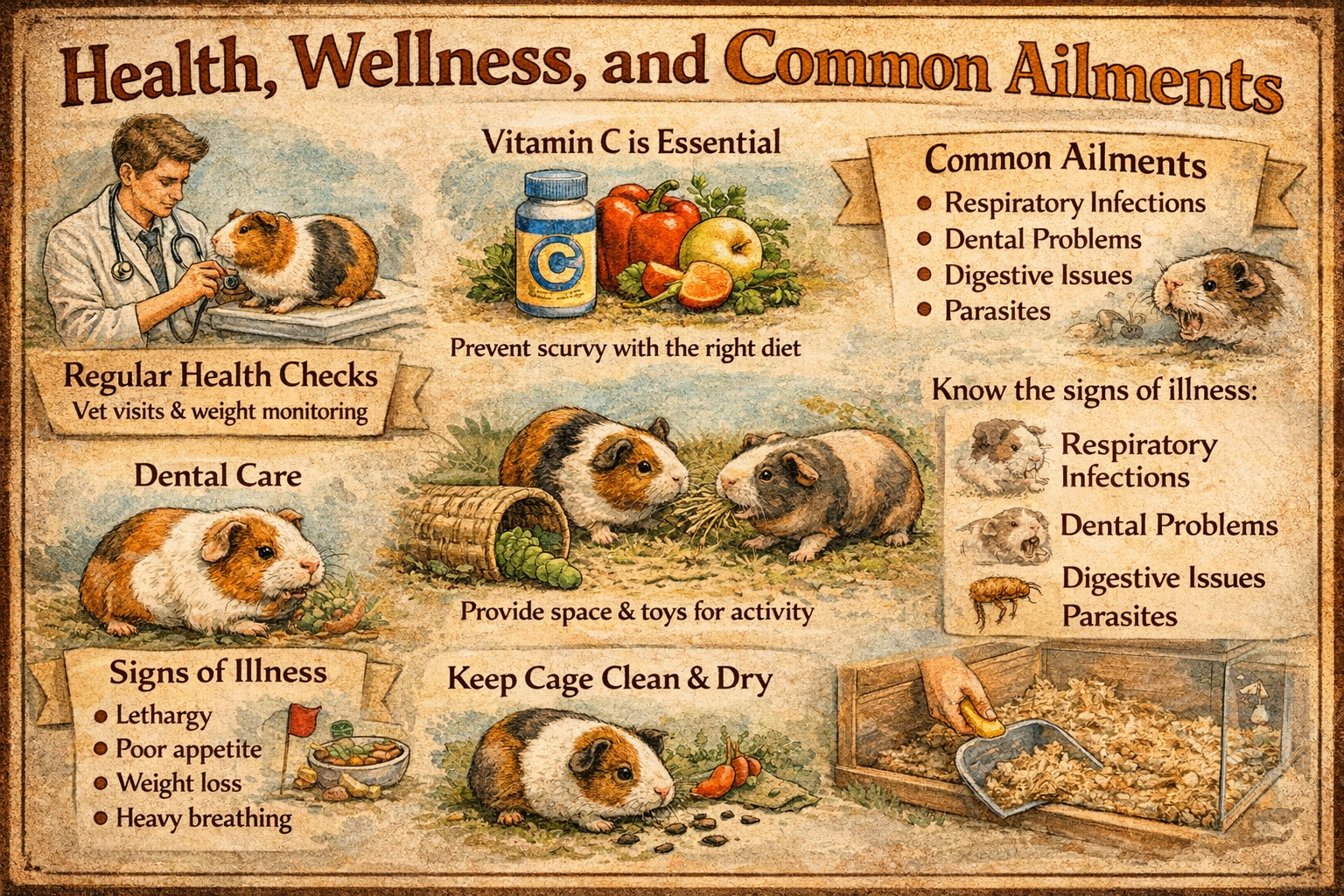
As mentioned, about Guinea pig physiology, the inability to synthesize Vitamin C is a defining trait, just like in humans. A deficiency leads to scurvy, which causes symptoms like lethargy, rough coat, swollen joints, diarrhea, and a reluctance to move. Always supplement their diet with Vitamin C-rich veggies, and consider a liquid vitamin C supplement or tablets if advised by a vet.
Chapter 6: Health, Wellness, and Common Ailments
A healthy guinea pig is a happy one. Because they are prey animals, they are masters at hiding illness. By the time you notice visible symptoms, your pet may have been sick for a while. Daily handling and observation are crucial for early detection.
Signs of a Healthy Guinea Pig
-
Bright, clear eyes and nose (no discharge)
-
Smooth, clean coat (or healthy, supple skin for a hairless guinea pig)
-
Consistent eating, drinking, and pooping (their droppings should be firm, oval pellets)
-
Active and curious behavior
-
Normal breathing (quiet and not labored)
Common Health Problems
-
Respiratory Infections: Caused by bacteria, drafts, or dusty bedding. Symptoms include sneezing, wheezing, runny nose, eyes, and lethargy. This is a medical emergency.
-
Dental Disease: Overgrown teeth can cause “slobbers” (excessive drooling), weight loss, and difficulty eating. A vet can trim the teeth and address the underlying cause (usually lack of hay).
-
Bumblefoot (Pododermatitis): A painful infection of the feet, usually caused by wire flooring, soiled bedding, or obesity. It presents as swollen, red sores on the heels. Treatment requires a vet and improved husbandry.
-
Urinary Tract Issues (Stones/Sludge): Guinea pigs are prone to bladder stones, especially if fed a diet high in calcium (like alfalfa hay). Symptoms include squeaking when urinating, bloody urine, and lethargy.
-
Ovarian Cysts: Common in unspayed sows over two years old. They can cause symmetrical hair loss on the flanks and hormonal changes. Spaying is the recommended treatment.
-
Flies and Mites: External parasites can cause intense itching, hair loss, and flaky skin. A vet can prescribe appropriate topical treatments.
Finding an Exotic Vet
It is vital to locate a veterinarian who specializes in “exotic pets” or small mammals before you have an emergency. Not all cat and dog vets have the training or equipment to treat a guinea pig properly.
Chapter 7: Grooming and Maintenance
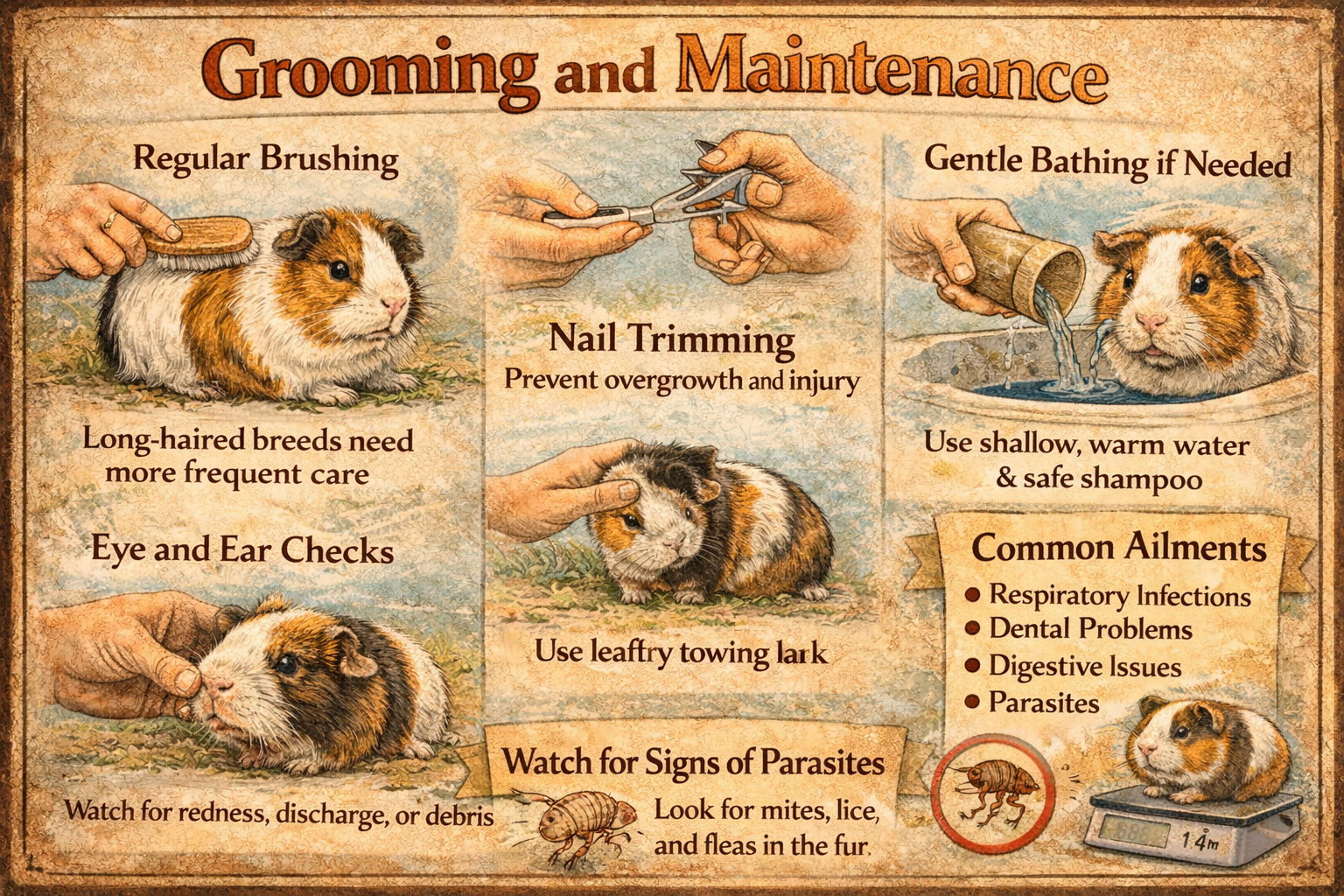
Grooming is not just about keeping your guinea pig looking good; it is a crucial part of their health and a wonderful bonding opportunity.
Nail Trimming
A guinea pig’s nails grow continuously. If left untrimmed, they can curl and grow into the pads of their feet, causing immense pain and infection.
-
Frequency: Every 3-6 weeks, depending on the individual.
-
Method: Use small animal nail clippers or human nail clippers with a curved edge. Have styptic powder or cornstarch on hand in case you cut the quick (the blood vessel inside the nail). If you are nervous, your vet or an experienced groomer can show you how.
Fur Care
-
Short-Haired Breeds: They are generally good at self-grooming but will benefit from a weekly gentle brushing with a soft brush to remove loose hair.
-
Long-Haired Breeds (like Peruvians or Shelties): These require daily brushing to prevent painful mats and tangles. Their fur may also need to be trimmed occasionally to keep it clean.
-
Hairless Guinea Pigs: As mentioned, their skin needs regular, gentle wiping to remove excess oil.
Bathing
Guinea pigs are generally fastidious self-cleaners and rarely need baths. Bathing strips their skin of natural oils and can be stressful. Only bathe them if:
-
They are visibly dirty (e.g., rolled in poop).
-
They have a medical condition like a fungal infection or mites (as directed by a vet).
-
They are hairless guinea pigs and need oil control.
If you must bathe them, use a shallow basin of warm water and a small amount of guinea pig-safe shampoo. Dry them thoroughly with towels and a low-heat hairdryer (on the coolest setting) immediately afterward, as they can easily get chilled.
Chapter 8: Behavior, Enrichment, and Fun
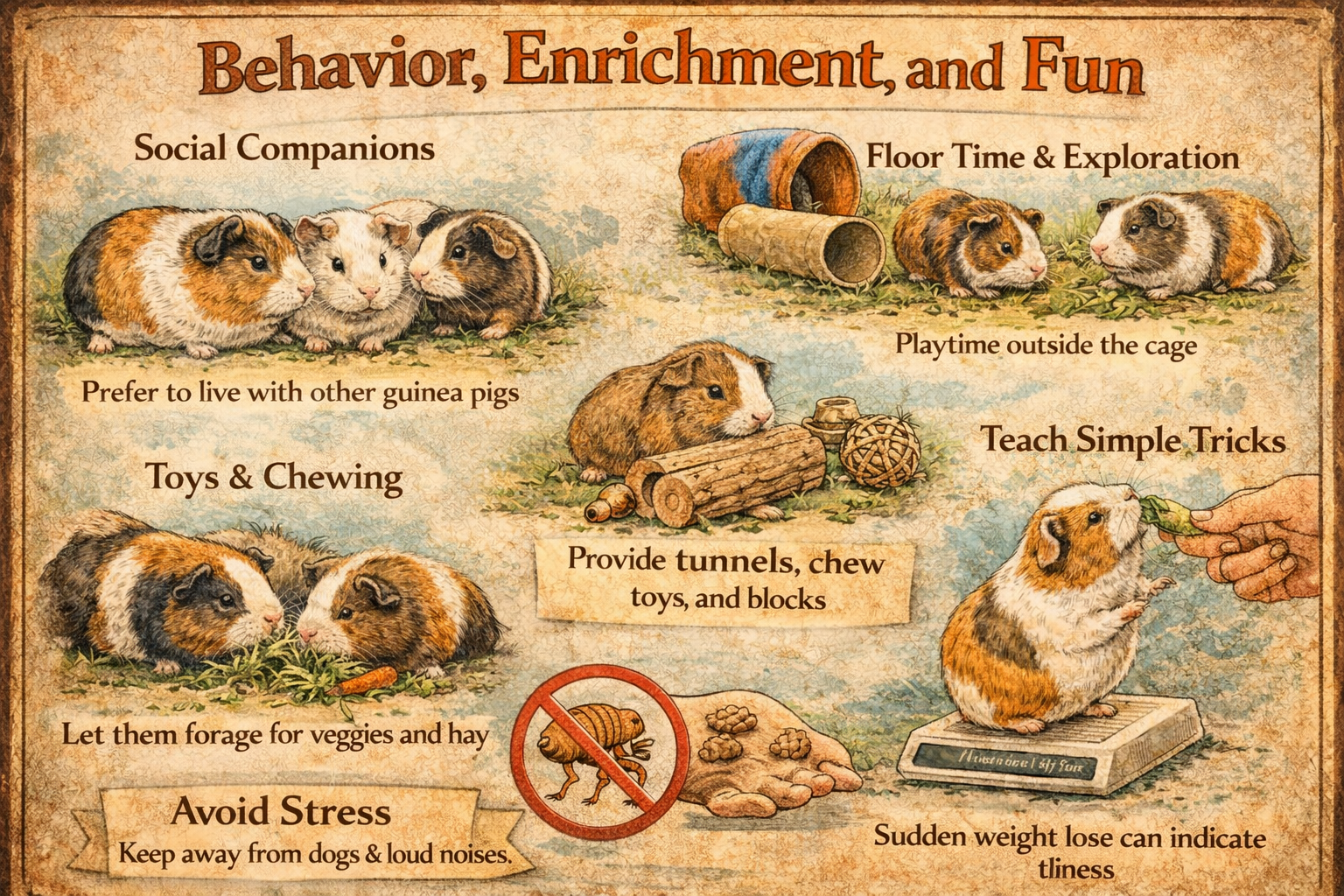
A bored guinea pig is an unhappy guinea pig. Enrichment is key to stimulating their minds and encouraging natural behaviors. This is where you get to see their true personalities shine.
Floor Time
Allow your guinea pigs supervised time outside their cage to explore a safe, enclosed area. This could be a hallway, a bathroom, or a pop-up pet playpen. Ensure the area is free of electrical cords, small objects they could swallow, and places where they could hide and get stuck.
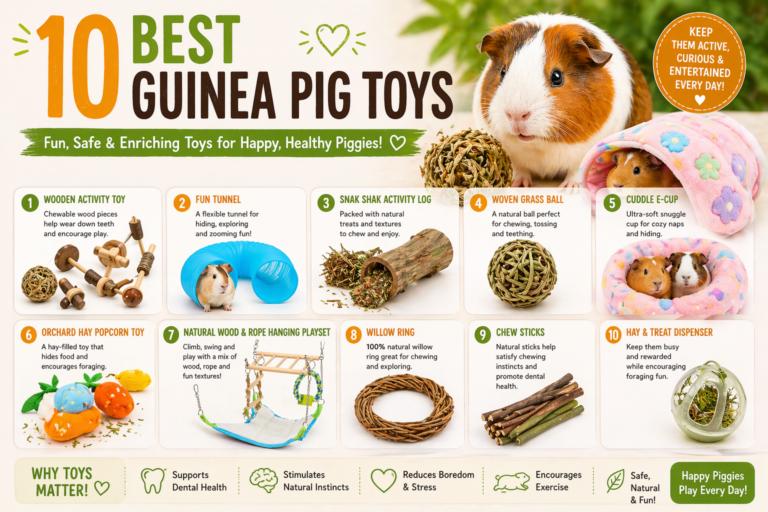
Toys and Chews
Guinea pigs need to chew to keep their teeth short. Safe options include:
-
Untreated wooden blocks or apple branches.
-
Wicker balls and tunnels.
-
Cardboard tubes stuffed with hay.
-
Commercial chew toys made from loofah or seagrass.
Popcorning
One of the cutest behaviors you will ever see is “popcorning.” This is when a guinea pig jumps straight up into the air, sometimes twisting or kicking its legs out. It is an involuntary expression of sheer joy and excitement, often seen in young pigs or when they are let out for floor time.
Training
Yes, you can train a guinea pig! Using positive reinforcement with small treats (like a tiny piece of bell pepper), you can teach them to:
-
Come when called.
-
Stand up on their hind legs (beg).
-
Walk through a tunnel.
-
Spin in a circle.
Conclusion: The Joy of Guinea Pig Parenthood
Bringing a guinea pig into your home is a decision that will reward you with years of companionship, laughter, and gentle affection. They are not just “starter pets” for children; they are complex, emotional beings that thrive on interaction and care. Whether you are charmed by the fluffy abundance of a Peruvian or the unique, warm snuggles of a hairless guinea pig, the experience of caring for these animals is deeply fulfilling.
Remember that, about Guinea pig ownership, the most important thing is commitment. They rely on you for everything: their health, their happiness, and their safety. By providing a spacious home, a proper diet, and plenty of love, you ensure that your little friend lives their best life.
For daily inspiration, adorable videos, and more quick tips on caring for your cavy, be sure to subscribe to MrGuineaPigsOfficial on YouTube. The community there is filled with fellow enthusiasts who share your passion for these wonderful creatures. Here’s to many happy years of wheeks, purrs, and popcorns with your new best friend!
One Comment